Insights

The Inflation Reduction Act and Hospice Pharmacy: Real Savings, Real Limits

Grant Faubion

President & CEO

Summary

Drug prices are down under the IRA. For hospice, the real impact is financial stability, not formulary expansion.

Read the full article
Explore more insights

May 6, 2026

Over the past year, many hospice leaders have heard some version of this:

“Drug prices are finally coming down.”

That’s true. But inside a hospice operation, the reality is more nuanced.

The Inflation Reduction Act is starting to reshape drug pricing through Medicare negotiation, inflation caps, and structural changes that are already showing up in pharmacy spend.

For hospice, the impact is real. But it’s not where most people expect.

Where prices actually moved

The first wave of pricing pressure has hit high-cost, high-utilization Medicare drugs:

  • Eliquis
  • Januvia
  • Farxiga
  • Entresto
  • Imbruvica

These are meaningful clinical therapies with historically high price points. On paper, this looks like a major win.

Why most still don’t make it onto hospice formularies

Even after price reductions:

  • Per-day costs are still above hospice PPD thresholds
  • Clinical use remains case-specific, not routine
  • The hospice still carries the cost under the Medicare benefit

A 20–40% price drop sounds significant, but in hospice economics, that often isn’t enough.

Here are some examples:

  • Anticoagulants like Eliquis may be appropriate in select cases, but broad use can erode margin quickly
  • SGLT2 inhibitors like Farxiga have emerging value, but are not core hospice meds
  • Oncology agents like Imbruvica remain outside sustainable models

Bottom line: prices are down, but not low enough to change core formulary strategy.

Where the IRA is helping hospice

This is where the real impact shows up. Not in adding new drugs. In stabilizing the overall pharmacy budget.

  1. Lower ceiling on high-cost outliers. Fewer cases that break the budget. Less volatility in PPD.
  2. Inflation caps are working quietly. Fewer mid-year price spikes. More predictable spend.
  3. Pressure on legacy pricing models. As rebates compress, spread-based models tighten. Transparent pricing becomes more competitive.

This is already happening.

What this means for hospice leaders

The takeaway is not “drug costs are solved.” It’s this: the structure of pharmacy spend is changing, even if the formulary isn't.

Practical implications:

  • Expect modest downward pressure on total PPD.
  • Expect improved predictability, more than dramatic savings.
  • Stay disciplined on formulary additions.
  • Re-evaluate vendor models. This environment exposes differences fast.

The bottom line

The Inflation Reduction Act is not a formulary expansion event for hospice. It’s a financial stabilization event. Costs at the top end are coming down. Price growth is being constrained. Variability is decreasing. That combination matters. Even if most of these drugs never become standard hospice therapies. If you’re reviewing pharmacy spend this year, the signal is there. It just isn’t where most people were told to look.

Grant Faubion

President & CEO

Stay up to date

Subscribe to our newsletter

Submit
Thank you! Your submission has been received!
Oops! Something went wrong while submitting the form.

Latest Updates

Press Release
Technology
Compliance & Security
Clinical & Care Tools
Operations & Efficiency
Read Full Article

Managing Anorexia-Cachexia Syndrome in Hospice Care

Anorexia-cachexia syndrome causes appetite loss and muscle wasting in serious illness, driven by inflammation rather than simple hunger. Care focuses on comfort — offering favorite foods, considering medications like dexamethasone or olanzapine when appetite loss is distressing, and gently helping families understand that eating less is a normal part of the body winding down.

Read Full Article

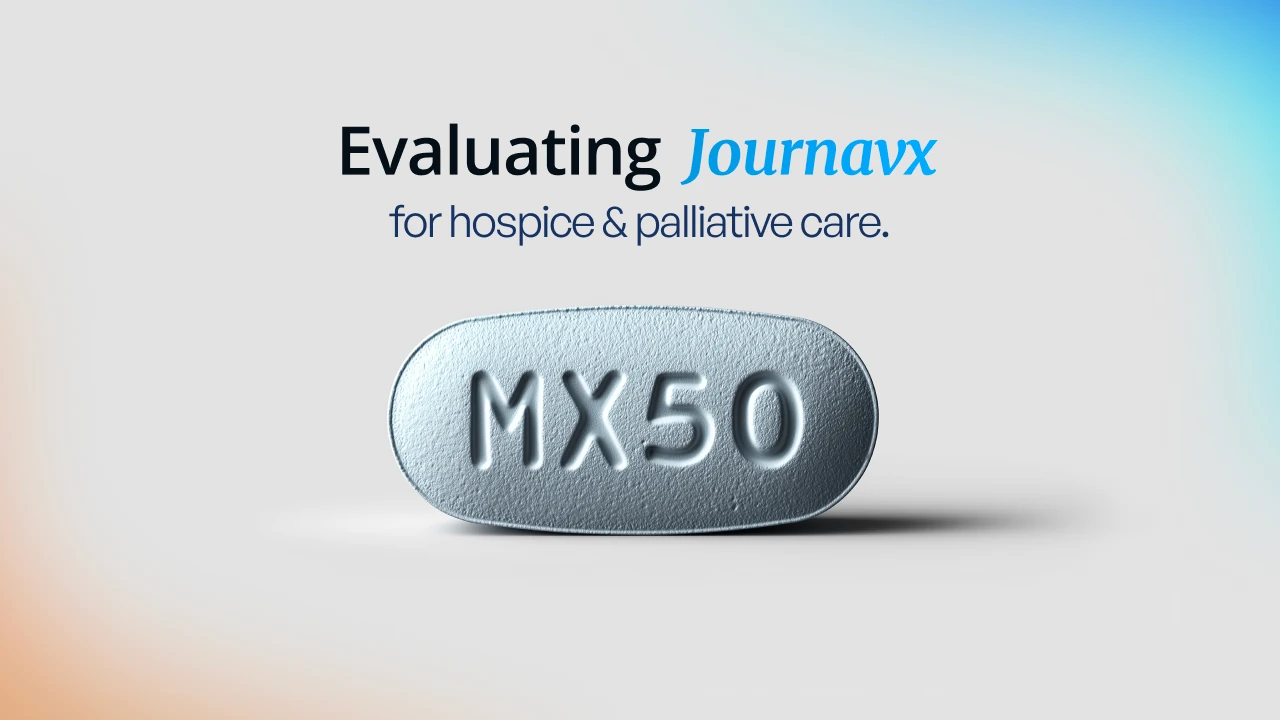
Journavx in Hospice and Palliative Care: Clinical Potential and Current Limitations

A practical look at Journavx and what its early promise, current evidence, and limitations may mean for hospice and palliative care.

Read Full Article

Hospice Comfort Kits: Improve Quality & Reduce Costs

Comfort kits are pre-packaged medications kept in the home that allow hospice caregivers to respond immediately to end-of-life symptoms like pain, anxiety, and shortness of breath. By ensuring the right medications are available when symptoms emerge, comfort kits help reduce after-hours costs, emergency visits, and unscheduled nursing calls while improving both care quality and caregiver satisfaction.

Read Full Article

When to Stop Statins in Hospice Care: Benefits, Risks, and Deprescribing Guidance

Learn when to stop statins in hospice care, including clinical rationale, side effects, and deprescribing guidance to reduce medication burden and improve comfort.

Read Full Article

From Neutral to Revenue-Driven: How PBM Incentives Are Changing Hospice Pharmacy

Hospice pharmacy benefits used to feel straightforward: manage a formulary, pay local pharmacies, and get medications to the bedside quickly. But simplicity has given way to PBM incentives that prioritize revenue over urgency, reshaping costs, workflows, and access when hospice care needs to move fast.

Read Full Article

Do ABH or ABHR Topicals Work? An Evidence Review for Hospice Teams

Topical ABH and ABHR  have been used for years in hospice and palliative care because they feel simple: apply to the wrist, avoid swallowing, reduce burden on families. But convenience isn’t the same as efficacy.

Read Full Article

What’s Actually Driving Your Pharmacy PPD Up—And Why No One Has Given You a Straight Answer

Hospice leaders across the country are seeing the same thing: PPD is rising even when utilization isn’t.

Read Full Article

Understanding Deprescribing in Alzheimer's Care

In late-stage dementia, balancing potential benefits against side effects requires clear communication, shared decision-making, and evidence-based guidance.

Read Full Article

Wise Hospice Options Partners with BUZZ to Strengthen Real-Time Communication and Support for Hospice Teams

Wise Hospice Options is partnering with Buzz by Skyscape to make communication faster, simpler, and more secure for hospice teams.

Read Full Article

A Practical Approach to Managing Wound Odor

Managing Wound Odor in Hospice Care — a straightforward guide to what’s actually working in the field, from hypochlorous cleansers to low-cost metronidazole prep.

Read Full Article

Deprescribing Antiplatelet and Anticoagulant Medications

In hospice care, the benefits of antiplatelet and anticoagulant therapy often diminish as risks rise — bleeding, pill burden, and falls can outweigh prevention.

Subscribe

Subscribe to our newsletter

Submit
Thank you! Your submission has been received!
Oops! Something went wrong while submitting the form.

Now that you're here...

Let’s talk through your workflow.

We’ll map your current process and show where we can reduce rework, risk, and spend.

I agree to the privacy policy
Submit
Thank you! Your submission has been received!
Oops! Something went wrong while submitting the form.