November 10, 2026
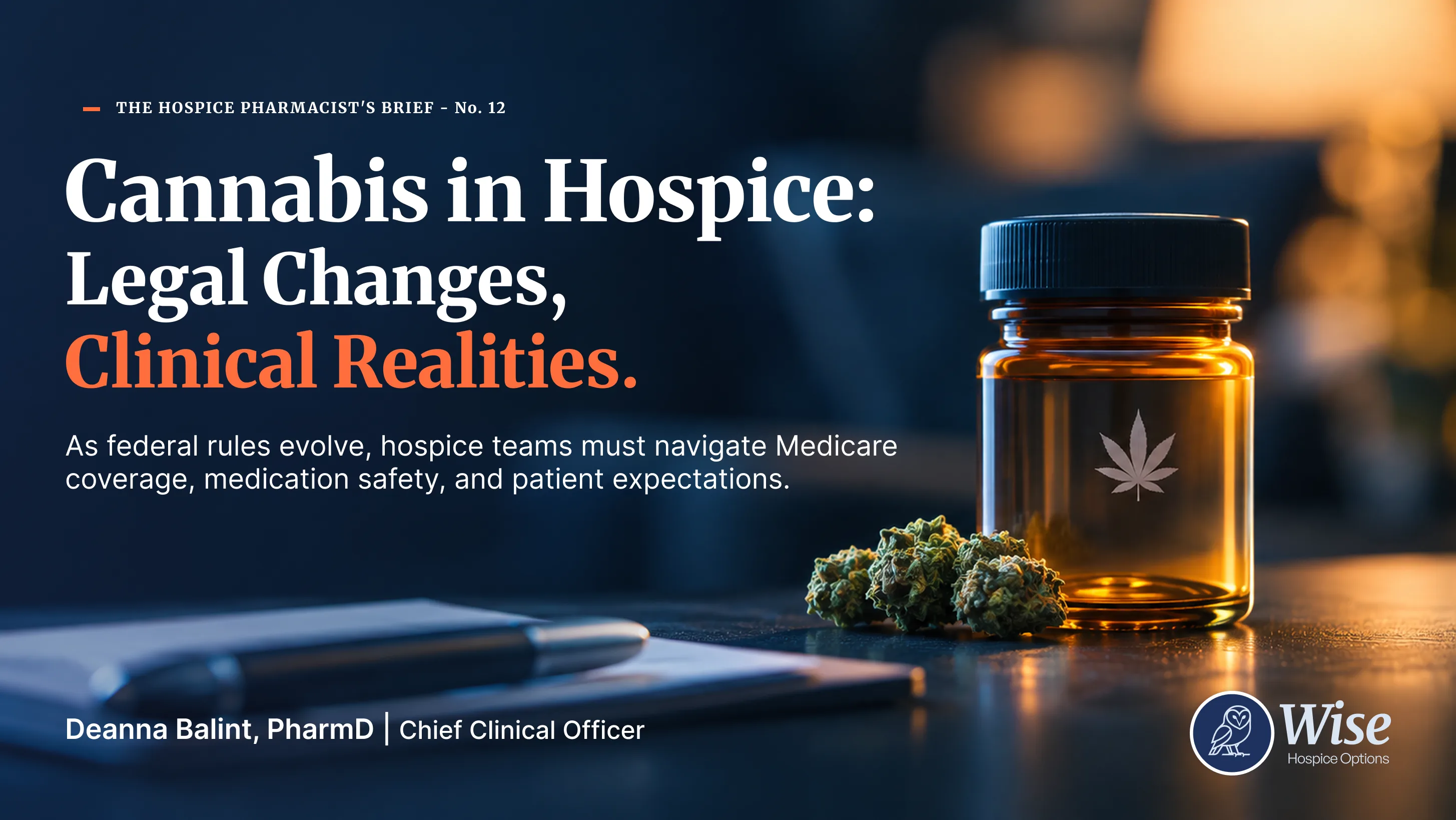
With growing interest in medical marijuana, many hospices are asking whether recent federal changes affect hospice coverage. The short answer: not at this time. The DEA’s marijuana rule changes how marijuana is regulated federally, but it does not change what Medicare covers under the hospice benefit.
For now, state-approved medical marijuana purchased from a dispensary should continue to be treated as a patient expense. Because botanical cannabis is not FDA-approved, it does not meet Medicare’s definition of a covered hospice drug.
There is, however, an important distinction. FDA-approved cannabinoid medications such as Marinol® (dronabinol), Syndros® (dronabinol), and Cesamet® (nabilone) may be covered when they are related to the patient’s terminal prognosis and included in the plan of care. These products were not affected by the recent rule. Epidiolex® was also unaffected, having been removed from federal controlled substance schedules in 2020.
What this means for your hospice:
- Patients may continue to use dispensary medical marijuana at their own expense.
- Cannabis use should be documented and reviewed for potential interactions with other medications, particularly opioids and benzodiazepines.
- Discussions about cannabis use should be incorporated into care planning with patients and families.
- FDA-approved cannabinoid medications remain an option when clinically appropriate.
As regulations continue to evolve, staying informed is essential. We will continue to monitor developments from CMS and the DEA and share updates that may affect hospice practice.
References:

Deanna Balint Pharm.D.
Chief Clinical Officer

Stay up to date
Subscribe to our newsletter