September 22, 2026
What Is Serotonin Syndrome?
Serotonin syndrome is a drug reaction caused by elevated serotonin levels. Symptoms can range from mild discomfort to severe, potentially life-threatening complications if the condition is not recognized and treated promptly. Although it is not widely reported, many clinicians believe serotonin syndrome is underreported because its symptoms can resemble those of many other conditions and syndromes. It has also been observed more frequently in critically ill patients.
What Serotonin Does in the Body
Serotonin is a neurotransmitter that also functions as a hormone. It plays a role in many of the body’s regulatory processes, including mood, sleep, digestion, and blood coagulation. Most serotonin is produced in the intestines, while a smaller percentage is produced in the brain. Much of the body’s serotonin is stored in blood platelets, where it supports clotting in response to injury. In the brain, the pineal gland converts some serotonin into melatonin.
Why Serotonin Syndrome Matters in Hospice
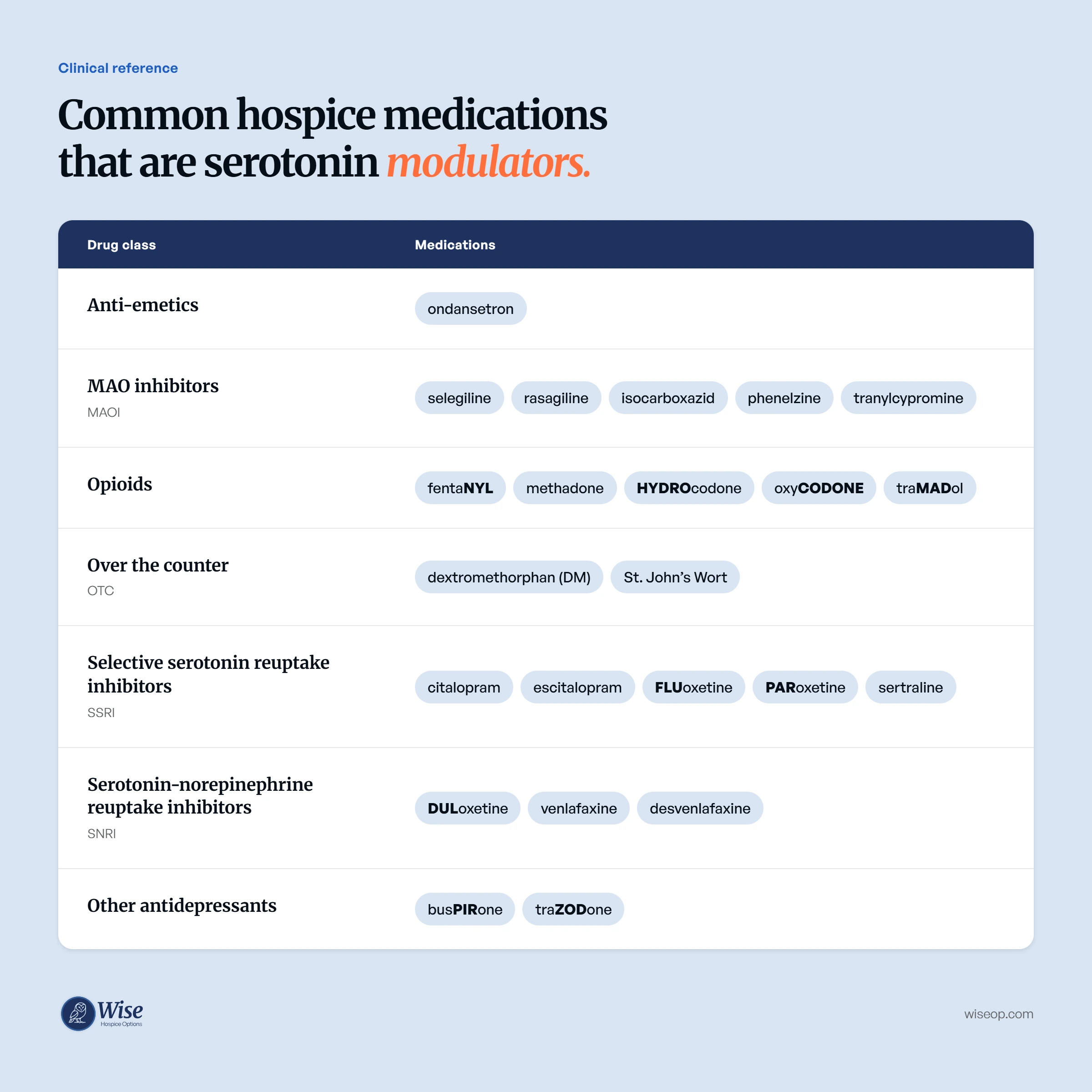
This is especially relevant in hospice care because many hospice patients take medications that affect serotonin levels. These medications are generally safe when used individually; however, the risk increases when several serotonin-modulating medications are used together. Common examples include opioids, selective serotonin reuptake inhibitors (SSRIs), serotonin-norepinephrine reuptake inhibitors (SNRIs), trazodone, mirtazapine, ondansetron, buspirone, tricyclic antidepressants, and cyclobenzaprine. These medications increase serotonin activity in the central nervous system and are often used in hospice to manage a wide range of symptoms. Because they may need to be titrated upward in dose or frequency, and because some patients enter hospice already taking multiple serotonin-modulating medications, careful monitoring is important.
Signs, Symptoms, and Treatment
The signs and symptoms of serotonin syndrome can vary in both type and severity. Milder symptoms may include restlessness, agitation, muscle twitching, muscle rigidity, sweating, fever, diarrhea, nausea, vomiting, and insomnia. More severe symptoms may include tremors, irregular heartbeat, high fever, high blood pressure, confusion, delirium, and seizures. Treatment typically focuses on stopping or reducing the contributing medications and managing symptoms. Supportive measures may include antipyretics for fever, benzodiazepines such as lorazepam or diazepam for muscle rigidity or agitation, and, in some cases, cyproheptadine, an off-label serotonin antagonist.
Common Hospice Medications That Affect Serotonin
Learn more / references
- Chow R, Kozhevnikov D, Horn Prsic E. Serotonin Syndrome in Palliative Care, Fast Fact #403. Palliative Care Network of Wisconsin; J Palliat Med 2020 (doi:10.1089/jpm.2020.0492).
- Serotonin Syndrome. StatPearls, NCBI Bookshelf. A free, peer-reviewed clinical overview.
- Boyer EW, Shannon M. The Serotonin Syndrome. N Engl J Med 2005;352:1112–20 (PubMed). The standard review article.
- Dunkley EJC, et al. The Hunter Serotonin Toxicity Criteria. QJM 2003;96:635–42. The diagnostic criteria most clinicians use.
- U.S. FDA. Drug Safety Communication: FDA warns about several safety issues with opioid pain medicines
- Perananthan V, Buckley NA. Opioids and antidepressants: which combinations to avoid. Australian Prescriber 2021.
- Serotonin Syndrome. Cleveland Clinic.

Deanna Balint Pharm.D.
Chief Clinical Officer

Stay up to date
Subscribe to our newsletter